Menu Close

Category: Cloud (page 9 of 32)

How to Give Toodledo a Visual Makeover, and Turn It Into a Standalone App, With User Styles

toodledo style.jpeg

I love Toodledo. Ever since I crowned it my task manager of choice over a year ago, it has remained as one of the main tools in my productivity arsenal. Read our prior review for a look at why it stands as such a strong task management app for geeks. One shortcoming of Toodledo, and a factor that keeps many people from using it, is the user interface. To put it bluntly, it’s ugly. But it doesn’t have to be. With very little effort, you can turn Toodledo into a visually appealing productivity tool.

Read more


Quick, Get Your Invitation to Try Spotify For Free

spotify

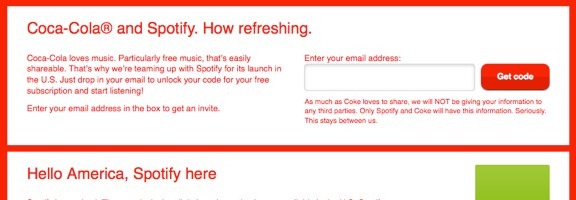
Spotify invitations are now hard to come by (or so I’m told), but as of the posting of this article, you can get one, thanks to Coca Cola. Just follow the link below. I tried it, and have been playing around with Spotify for the last hour or so.

The link is here:

https://www.spotify.com/us/coca-cola/

Let us know how it works for you.


Find Google+ Users By Occupation, Location, Popularity, and More

Find People on Plus.jpeg

Are you on Google+ by now? If not, head on over to our invitations post, and request an invitation. While Google+ puts Facebook to shame in many areas, one feature that it lacks is a tool to search users. You can hack together some attempts to search Google profiles, but that’s about it. At least one site is attempting to fill the void. Find People on Plus is a site geared towards- you guessed it- finding people on Google+.

Read more


Is Usenet Dead?

image

Today, 40Tech is pleased to present you with a guest post from Jared Scott.

Long before you ever created your first MySpace page or added your grandma as a friend on Facebook, two guys in North Carolina were looking for a new way to share local announcements. The year was 1979, and Tom Truscott and Jim Ellis of Duke University established a link to the nearby University of North Carolina and Usenet was born.

Early the next year, Usenet was connected to ARPANET through UC Berkeley and the community quickly flourished.

Before online discussion forums, email or instant messaging, Usenet was the original social network.

In many ways, Usenet was the Wild West of the Internet. No subject was too far out there and “Newsgroups” for just about every topic imaginable were created. Spirited discussions between professionals and amateurs would play out over days, weeks or months.

Usenet is the place where Linus Torvalds’ announced Linux, Tim Berners-Lee announced the World Wide Web, and where the first “Make Money Fast” post was placed.

And most movie buffs don’t know that The Internet Movie Database, better known as IMDb, even began on Usenet in 1990.

With the emergence of the World Wide Web, many people began calling for the death of Usenet. In fact, I just read an article on TheNextWeb.com this past week referring to Usenet as Long Dead & Buried.

This couldn’t be further from the truth.

While no longer commanding the spotlight it once shined under, Usenet has been quietly thriving for years. As major Universities and Internet Service Providers abandoned their Usenet servers, private enterprise stepped in to pick up the slack.

No longer constrained by the limited budgets of academic institutions and armed with capital from paying customers, competing Usenet providers have been steadily improving the product and providing previously unthinkable levels of service.

Today, it is not uncommon for a Usenet service provider to offer one or all of the following:

  • Uncapped Download Speeds. By harnessing the full speed of your Internet connection, downloads can take a fraction of the time they do with other technologies.
  • Privacy & Security. Secure Sockets Layer (SSL) server connections provide an encrypted link between your computer and the server keeping prying eyes out.
  • Huge Data Archives. Retention of data may be the biggest improvement of all. Almost nothing gets deleted from Usenet these days.

Now well into its 30’s, Usenet has continued to develop, evolve and mature. As one of the pillars of the Internet, Usenet has a long and robust history. And as a system built on openness and mutual benefit, Usenet is well positioned to last another 30 years.

If you’ve never used Usenet or just haven’t used it in a while, take a look. You’ll be surprised at what you find.

Jared Scott is a blogger and Internet entrepreneur who spends the vast majority of his waking hours connected to the Internet. He’s currently the Manager of Public Outreach for Binverse.com. You can follow his updates on Facebook.


Dropbox Updates Terms (again) to Calm Intellectual Property Fears

Dropbox Updates Terms (again) to Calm Intellectual Property Fears | 40Tech

Dropbox has been upsetting some of its users, recently, with changes to its terms of service that caused concern and outrage regarding privacy of files uploaded to the service. Sure, outrage is easy to come by on the internet, especially with changes to heavily used cloud services, but there were some valid arguments to be made — and people didn’t hesitate to make them. First, there was that whole thing about decrytpting users’ encrypted files and handing them over to authorities when asked. Questions of users’ legal and moral behaviours notwithstanding, the simple fact that Dropbox claimed the right to decrypt what was encrypted was enough to shake up many people.

Most recently, however, Dropbox did something that should have been considered a good thing: they updated their terms to plain language that made them easier to understand. Unfortunately that blew up in their face, as some of the wording gave Dropbox the right to use your files pretty much however they want, intellectual property notwithstanding. The latest update to the Dropbox terms of service is aimed at quelling those fears.

Last week’s Dropbox update in terms stated the following:

you grant us (and those we work with to provide the Services) worldwide, non-exclusive, royalty-free, sublicenseable rights to use, copy, distribute, prepare derivative works (such as translations or format conversions) of, perform, or publicly display that stuff to the extent reasonably necessary for the Service.

This was followed by:

This license is solely to enable us to technically administer, display, and operate the Services.

That last sentence was meant to apply the new Dropbox usage rights to your files to the smooth running of the service, but the phrasing was too vague to make users feel secure that Dropbox wouldn’t and couldn’t abuse their intellectual property rights. For those that think it should be obvious, bear in mind that loopholes have a tendency to turn the legal system on its ear, and that there have been other services — mostly for photos — making news recently because they were specifically saying that they did own your content if you used their service.

In any case, in yesterday’s update, Dropbox has posted a revision to that contested clause that was accompanied by a blog post stating that they have “always believed your stuff is yours and yours alone,” and that they intend to quell users’ fears that Dropbox will own rights to their content. Here’s the new phrasing:

…By using our Services you provide us with information, files, and folders that you submit to Dropbox (together, “your stuff”). You retain full ownership to your stuff. We don’t claim any ownership to any of it. These Terms do not grant us any rights to your stuff or intellectual property except for the limited rights that are needed to run the Services, as explained below.

We may need your permission to do things you ask us to do with your stuff, for example, hosting your files, or sharing them at your direction. This includes product features visible to you, for example, image thumbnails or document previews. It also includes design choices we make to technically administer our Services, for example, how we redundantly backup data to keep it safe. You give us the permissions we need to do those things solely to provide the Services. This permission also extends to trusted third parties we work with to provide the Services, for example Amazon, which provides our storage space (again, only to provide the Services).

To be clear, aside from the rare exceptions we identify in our Privacy Policy, no matter how the Services change, we won’t share your content with others, including law enforcement, for any purpose unless you direct us to. How we collect and use your information generally is also explained in our Privacy Policy

This is definitely an improvement, as it clears up the intellectual property concerns. Of course, the original outrage over how Dropbox can monitor, decrypt, and share your files is still out there, but judging by the terms of service of Amazon’s Cloud Drive and others, including Facebook, Google, Apple, Skype, and Twitter, this sort of thing is fast becoming the norm for cloud services, especially those that offer storage – in the end, we users may have no choice but to assume the position, take it, and like it if we want to use these types of services.

What do you think?