
Menu Close

Tag: Mac (page 7 of 25)

Apple Kills Off Several MacOS Server Features

It sure sounds like macOS Server isn’t long for this world. Apple has announced a number of services that are being removed from Server, including Calendar, Contacts, DHCP, DNS, Mail, Messages, NetInstall, VPN, Websites, and Wiki. In addition, FTP support and iOS File Sharing support were removed from Server back in September.

In the age of NAS devices like Synology that offer easy setup of many of these services, I understand why Apple is doing this. Still, there are bound to be many Server fans upset over the loss of features from a product that had a devoted following.

Apple has moved some Server features into High Sierra, making them available to all users. These include the Caching Service, which let users save bandwidth by having a Mac cache iCloud data, app updates, and more, for use by other devices on the network. File Sharing has also been moved to High Sierra, and Time Machine backups can be made using SMB backups built into High Sierra.

If you want to take a look at all the features that previously were in Server, the OS X Server features page is still online.
OmniFocus 3 and OmniFocus for the Web →

Ken Case writing for the Omni Blog:

For all our customers in that situation, I have good news to share: we’re building OmniFocus for the Web. It will be greatly simplified from the OmniFocus you know: it won’t have custom perspectives or notifications or maps. It won’t have Review. It won’t let you set up new repeating tasks (though it will correctly handle repeating tasks that are already set up). Its capabilities will be a lot more like what we shipped in our very first iPhone app: you’ll be able to see the lists of tasks in your Inbox, Projects, and Tags, with their associated notes and due dates. You’ll be able to edit basic information about those tasks (checking them off, assigning a due date, changing a title or note) and of course you’ll be able to add new tasks.

This blog post by the head of the Omni Group is filled to the brim with information on what the company plans for 2018, including a new version of OmniOutliner for iOS, and a new version of OmniFocus. The introduction (finally) of tags would have been big news on its own, but the announcement of OmniFocus for the Web might be even bigger if you need to use Windows.


4 easy ways to get back to the Desktop on your Mac →

Charlie Sorrel, writing for Cult of Mac:

This one may already be enabled on your Mac. Try it now. Just place your thumb and fingers onto your trackpad, and spread them out. It’s as if you’re pushing away all those windows with your fingers, and that’s exactly what happens. The windows fly off to the sides of the screen, revealing your desktop.

If you’re minimizing apps to get to your desktop, or swiping to an empty space, there’s a quicker way. The shortcut keyboard combination described in the Cult of Mac article was new to me, and I always forget about the trackpad gesture. Not mentioned in the article is that if you have a MacBook Pro with a Touch Bar, you can also set up a virtual key to take you to your desktop.


Subscription service for Mac apps Setapp has 15,000 subscribers a year after its launch →

Romain Dillet, writing for TechCrunch:

And the numbers are quite impressive after just a year. Over 200,000 people tried Setapp and 15,000 are paying. It represents around $1.5 million in annual recurring revenue (even though a large portion of this revenue goes back to app developers). Setapp could represent a breath of fresh air for many independent Mac developers. Instead of relying of [sic] big income spikes around major releases, they could get some money every month from Setapp users.

If you’re on the fence about Setapp, I recommend trying it for a few months. The big advantage if you’re someone who already owns many of the apps the service offers: discovery and use of apps you might not even try.

I had actually gone through the trial of Setapp, and then dropped the service for several months because I already owned many of the apps. But when an app I owned came out with an update, I decided to give Setapp another try instead. As it turns out, I’m now using several apps that I wouldn’t have otherwise even tried. This was a surprise to me.


Apple Releases Employee Starter Guides for Mac and iOS

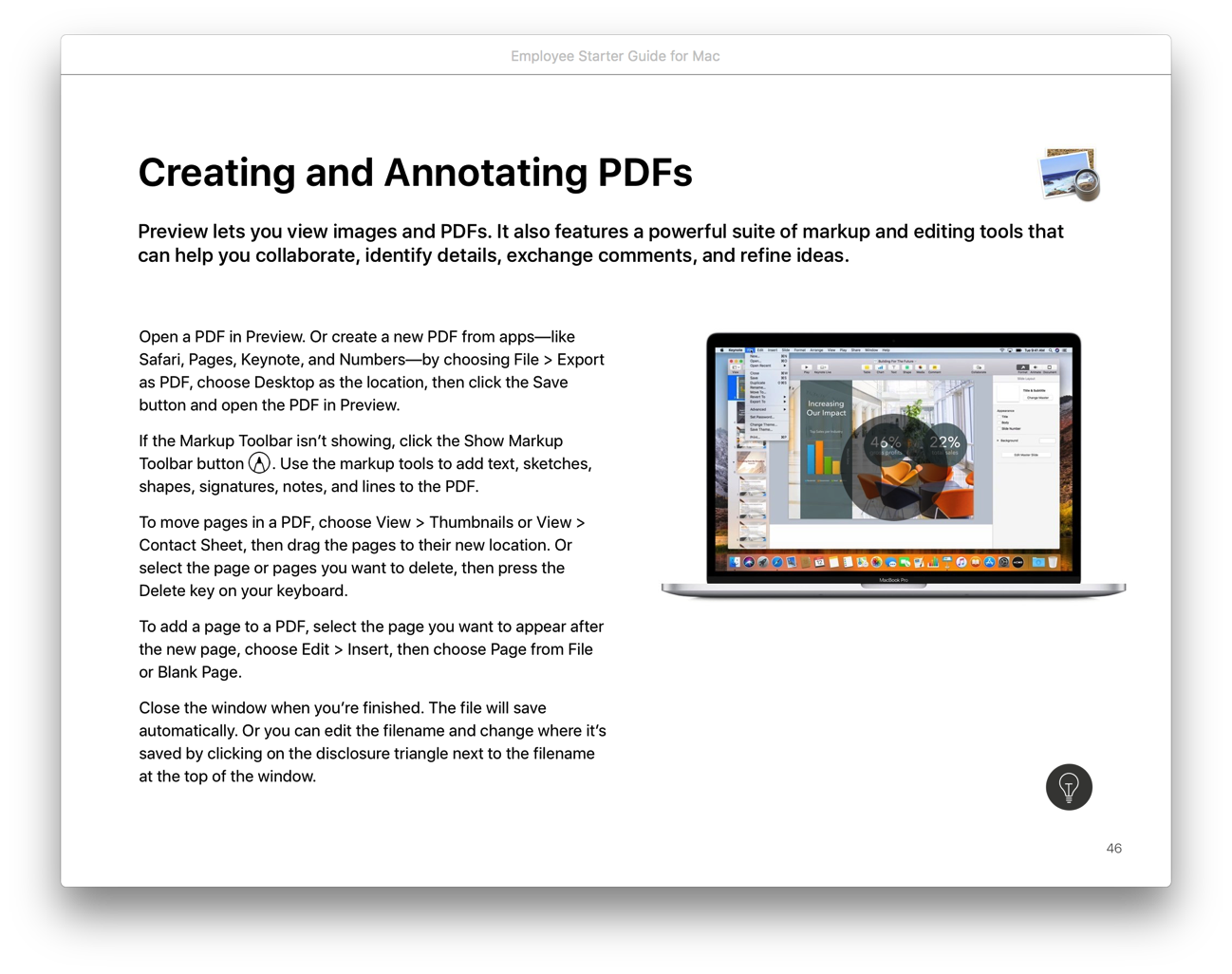
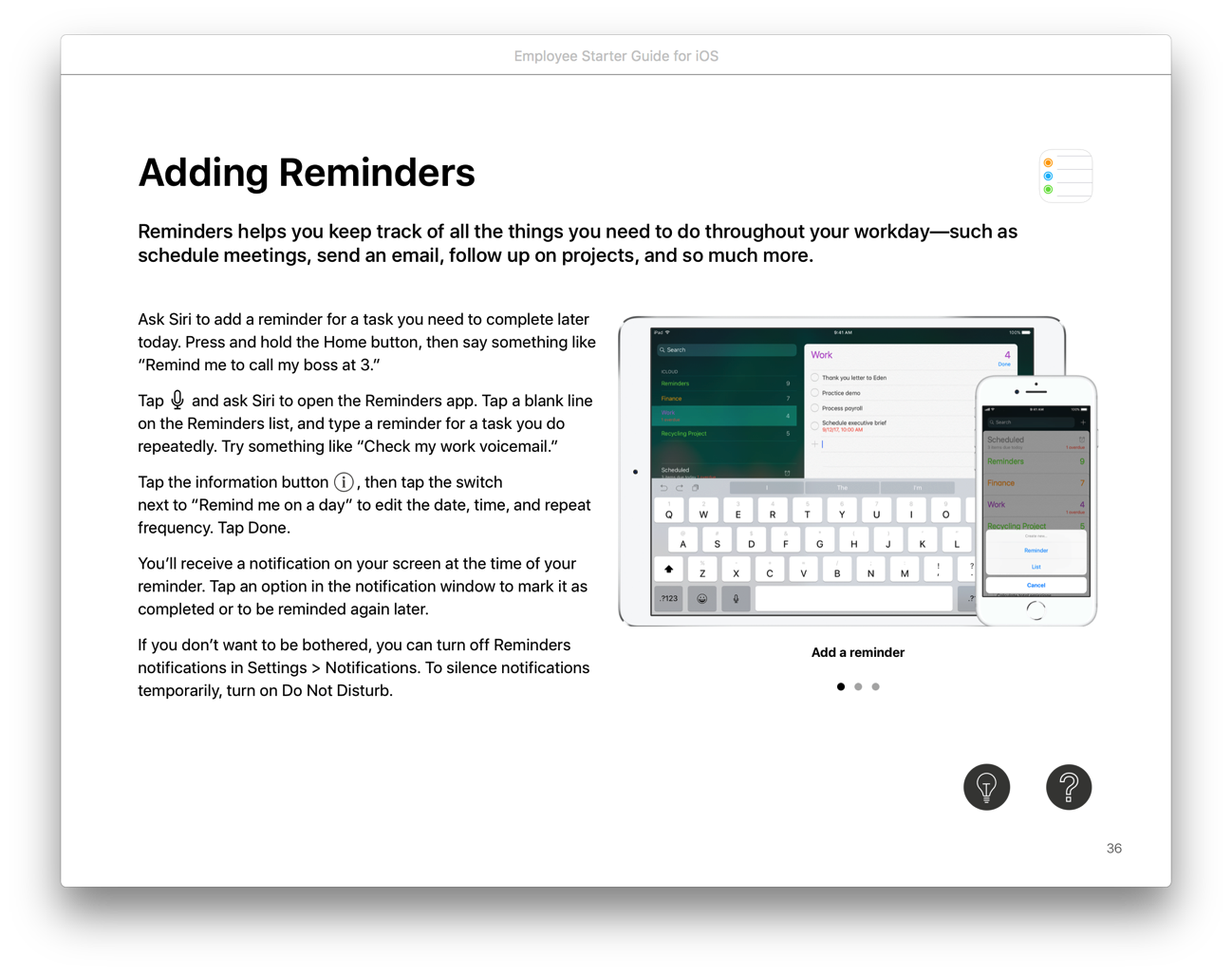
If you’re trying to get coworkers up to speed on Mac or iOS, Apple has recently released two books to help: Employee Starter Guide for Mac and Employee Starter Guide for iOS. I’ve just started going through them, but they seem to start at the ground level, and build from there.

Employee Starter Guide for Mac

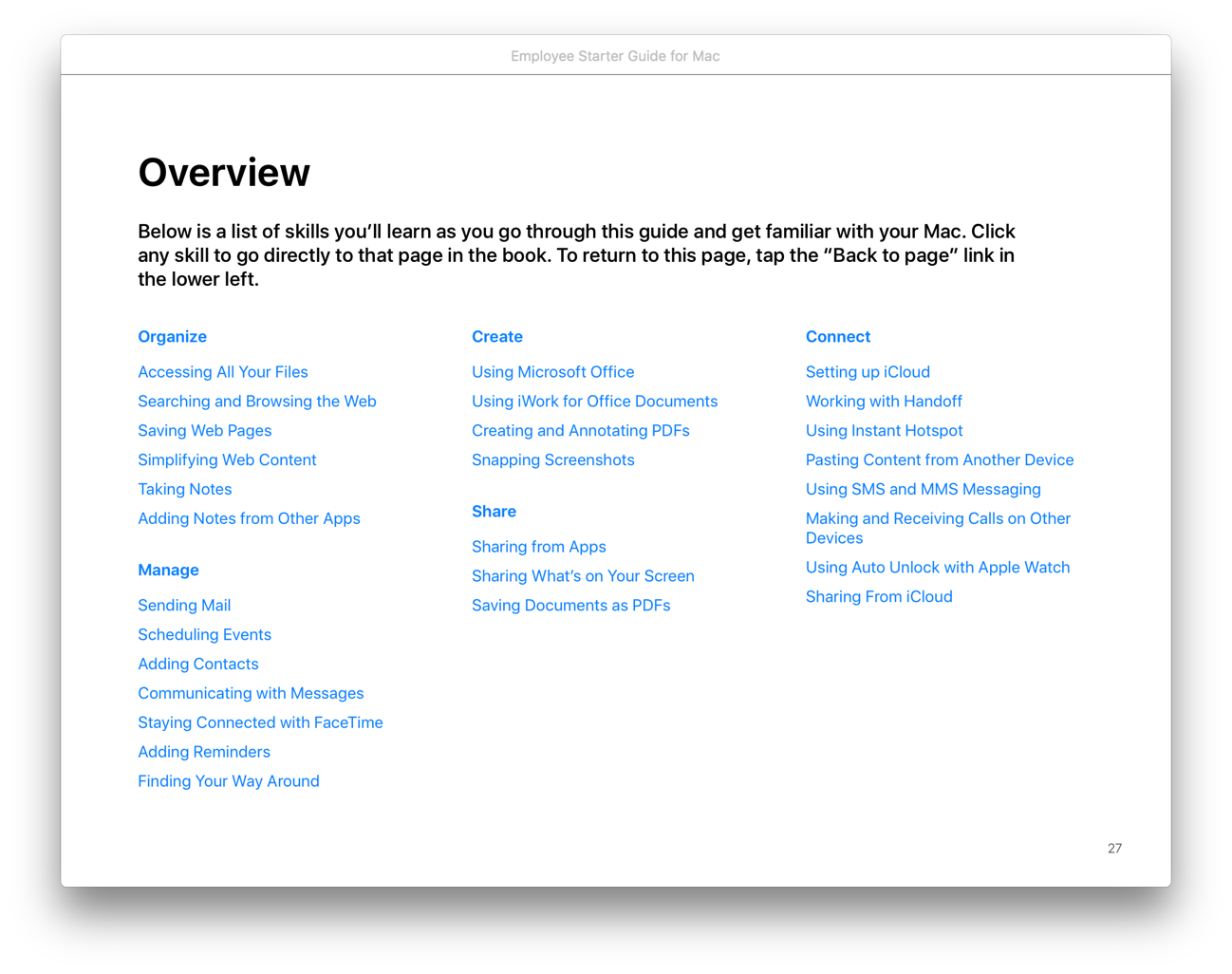
Both books are broken into four sections: Learning the Basics, Next Steps in Working with Mac/iOS, Extending Productivity Further, and Support for Mac/iOS. Each section is broken into subsections that go into detail about using a Mac/iOS device for different aspects of work, such as for collaboration.

Employee Starter Guide for iOS

Employee Starter Guide for Mac sample subsections

The books include recommendations for third party apps where appropriate. For example, the iOS book recommends PDF Expert and three other apps in the “Annotating PDFs and Forms” section.

Tech geeks are accustomed to finding answers and help online, but these books might be helpful to “normal” users who are just getting started with Mac or iOS. If you are looking for reference materials for your employees, or even for yourself, check these out.

Hat tip to Dave Marra, who mentioned this on Twitter.