

Menu Close

Category: Gadgets (page 5 of 11)

The Top Ten Electronics For the Car

The Top Ten Electronics For the Car | 40Tech

40Tech is pleased to present a guest post from Patricia.

There is a near infinite amount of electronic gadgets available for cars. Some are wacky and unnecessary, and some are truly innovative and useful. Here are ten electronic gadgets that will make life easier for any driver.

10. Interlock breathalyzer

For those who worry about drunk drivers, this device is a true lifesaver. It prevents a car from being turned on until the breathalyzer registers that the driver is not drunk.

9. Portable electronic air compressor

It’s a good idea to keep one of these in the trunk in case of a flat. They plug into the cigarette lighter and can save the day and allow you to make it to help in an emergency.

8. Engine light code reader

That nasty engine light can mean something serious or simply that the gas cap is loose. Rather than taking the car to a mechanic and paying big bucks to find out, check why the light is on yourself with one of these handy gadgets.

7. Radar detector

Not just for maniacal speeders, they help safe drivers avoid unfair speed traps in which speed limits drop abruptly with no warning signs. They are also a great help for those drivers who tend to lose track of how fast they are going.

6. Side mirror blinkers

These blinkers are a lifesaver for the driver that is changing lanes without noticing another vehicle in his blind spot. It allows other drivers to see the blinker without actually having to be behind the car.

5. Back-up camera

These not only help with avoiding other cars, they are great for detecting small children, animals, or other objects that the rear view mirror is not in a position to show.

4. In-car DVD player

For long trips, these are a great way to keep both kids and adults entertained. They also help keep parents focused on driving instead of dealing with tired and cranky kids.

3. A Hands-Free Kit

A kit that allows cell phone use without physically answering the phone is not only a convenience, but an important safety consideration. It allows the driver to keep hands on the wheel and eyes on the road.

2. GPS

Even though many phones and computers now have GPS in them, having a unit in the car is much more convenient. They prevent the headache and frustration of getting lost and are vital when driving in unfamiliar areas.

1. Car alarm

Nothing is so vital to a car as that which keeps it your possession. While most cars these days have electronic locks, there is still no substitute for a true car alarm. If your car is often parked in a crime-ridden area, a car alarm is essential.

Bio: Patricia knows nearly everything regarding vehicles. She assists people on the site CashforTrucks.com, rated as the number one car buying company.

IBM Creates Brain-like Computer Chips That Learn and Remember

IBM Creates Brain-like Computer Chips That Learn and Remember  | 40Tech

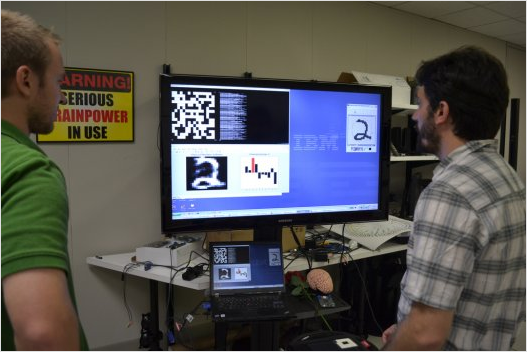
Remember IBM? They may not be the premier computer manufacturer they once were, but the world’s oldest computer company is still skating on the cutting edge of technology. Their latest achievement? Two DARPA SyNAPSE (Systems of Neuromorphic Adaptive Plastic Scalable Electronics) funded prototype chips that can learn and remember in a way that “begins to rival the brain’s function, power, and speed.”

Can you say Skynet?

Ok, so we’re nowhere near AI-driven world takeover, but thinking computer chips that require very little in the way of size or power to operate is definitely a step in the bright direction. What these chips really represent is a shift in the way computers process information. They move away from the traditional Von Neumann architecture that relies on processing and memory to work separate to each other. Both chips have 256 neurons, with one chip containing the programmable synapses, and the other, learning synapses that can “remember and learn from their own actions.”

IBM’s end goal is to create a shoebox-sized chip/brain that has some 10 billion neurons and 100 trillion synapses that runs on 1 kilowatt-hour of power (the human brain has 150 trillion synapses and needs about 20 watts). Eventually, they are looking to create cognitive computers that can take detailed input from multiple sources at the same time, process it and make a decision based on its own experiences as well as its programming. IBM has just finished phases 0 and 1 of the project and have already been experimenting with machine vision, associative memory, patterns recognition, navigation, and more.

Cognitive Computer Chip Demonstrates Handwriting Recognition

Like I said, don’t take a hammer to your computer and networked devices just yet — the fun’s only just beginning. These brain chips could herald a whole new age of computing.

Thoughts?

New Computer Chip Modeled on a Living Brain Can Learn and Remember [Popsci]


Credit Card Sized Tech Tells You if You Have HIV in 15 Minutes, for $1

Credit Card Sized Tech Tells You if You Have HIV in 15 Minutes, for $1 | 40Tech

This is one time when downscaling technology isn’t a cliché. None of that “cell phone implanted in your tooth” malarkey– the mChip is serious business. Serious, potentially game (and life) changing business.

Once upon a time, getting tested for HIV involved a trip to the doctor, a bit of blood-letting, and a rather tense wait. It was months, at first, then weeks, then days, and eventually it worked its way down to minutes. That’s all fine and dandy if you live in a developed country, but if you happen to live in Africa, where HIV is running rampant, then visiting your local doctor’s office could involve something of a trek. A trek you may not be able to afford or, due to fear of results, lack of time, or whatever other reason, may not be inclined to make.

Researchers at Columbia University have found a way to help.

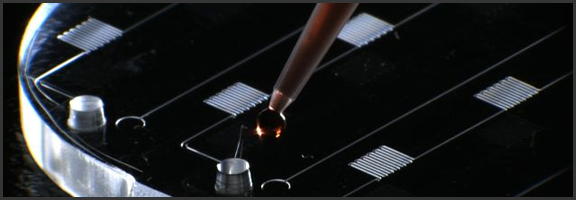
Using nanoparticles and microfluidics, they have taken an entire laboratory and miniaturized it in the mChip. All it takes is a drop of blood and a cheap optical sensor and the chip gives results in 15 minutes that are plain as day and require no interpretation. It can test for HIV and/or syphilis and has a 100% detection rate. There is a 4-6% chance of a false positive, as well, but that is the same margin in a traditional lab test. A false positive may be scary, but it beats the hell out of a false negative.

The best part about the mChip is the price. It only costs $1, which is amazing for a new piece of technology meant to help people. Or maybe I’m just a wee bit cynical… Either way, the price is fantastic.

The mChip also has the potential to be instantly actionable. If the user has a digital medical file, the mChip can reportedly use cellphone or satellite technology to interface with medical files and include the new record.

This is a fantastic step forward in the fight against HIV in undeveloped countries, but it’s possible technology like this will find its way into your local Wal-Mart pharmacy at some point. It would only make sense, wouldn’t it? And dating could get just a bit safer — if a bit awkward: “Just put a drop of your blood here, please. If all goes well, we can get started in about 15 minutes.”

Side Note: There is also an mChip that diagnoses prostate cancer that has been approved for use in Europe.

What are your thoughts on the mChip?


(via engadget, DVICE, FastCompany, Nature Medicine)


SmartBird: A Robot That Actually Flies Like a Bird [Random Tech Video]

A Robot That Actually Flies Like a Bird [Random Tech Video] | 40Tech

TED is a home for amazing things. If you’ve never been to TED.com, you should make it a point to go and spend a mini web-vacation there. Hell, spend a couple a week — it’s worth it! Their slogan is “Ideas worth spreading,” and I have yet to run into something on the site that defies that message. The awesome that I happened across this week (thanks to Pamela D Lloyd sharing a Rick Vlaha post on Google+) has made the hallowed halls of my “that was so freakin’ cool!” list.

A robot bird. Scratch that. A robot bird that looks and moves and flies like a real live bird! Holy, unmitigated awesome, Batman! The Wright Brothers’ and Da Vinci’s head would explode if they could see this.

The bird is inspired by the Herring Gull, and is the product of the genius of Markus Fischer and his Bionic Learning Network team at German technology company, Festo. There are no propulsion systems other than the flapping of the robot bird’s own wings, and its movements are so realistic, that it is likely that some audience members it flew over (twice) were thinking they should be covering their heads and getting under cover. This amazing creation is called SmartBird, and is also remarkable for the simple fact that the robot weighs only 450 grams.

Watch the video. Your brain will fall out your ear. 

If you don’t want to click the link (WordPress won’t let me embed the TED video), check out the YouTube video below that was taken by an audience member during the bird-bot’s first fly-over. It gets right to the point.


Here’s another — even real birds can’t tell the difference: 


Thoughts?


Are 3D Printers the Precursor to Star Trek Style Replicators? [VIDEO]

Are 3D Printers the Precursor to Star Trek Style Replicators? [VIDEO] | 40Tech

While I was toying about with the Sparks feature of Google+ last night (yeah, yeah, another post that has a reference to Google Plus — sue me, it’s new and it’s shiny!), I came across a video that caused my brain to explode (Plus post). It’s about a visit by theoretical physicist David Kaplan to the Z Corporation, a 3D Printing and Rapid Prototyping company that has developed 3D printing tech to the degree that they can replicate tools. Yep, you heard me… Star Trek fans: replicate!

David challenges the Z Corporation to create a Crescent Wrench (adjustable spanner), complete with moving parts — and all in one pass.

I’ve been curious about 3D printing for a while, and the video — which comes from the National Geographic Channel’s Known Universe series (Construction Zone) — shines a little light on the process. Z Corporation has taken things a bit further, however, by creating a proprietary mixture of specialized powder and binder material that is strong enough to make the tools they replicate more than just a neat paper weight. They actually work! I don’t know to what degree of torque or pressure these tools can stand, but, according to the Z Corporation’s spokesperson in the video clip, all it takes for added toughness is a little more resin.

I’m not sure about environmental implications, and I’m certain the cost would be astronomical, but I would love to have one of these printers in my house — wouldn’t you?

http://www.youtube.com/watch?v=LQfYm4ZVcVI

NOTE: This video is hosted on YouTube, and not by the National Geographic Channel. I wouldn’t be surprised if it gets pulled by the NGC due to copyright issues, so watch it while you can.  :)

What do you think of 3D printing?