“Open” is the new buzzword du jour, with a few of the major tech companies claiming to support open standards. Two of those companies are Google and Apple. How open are they?
First of all, what is “open?” As Wikipedia notes, there is no single definition of an “open standard,” and interpretations vary with usage. Even the companies themselves seem to have differing definitions of open, depending on the setting. Let’s take a quick look at Apple and Google, and at how “open” they are.
Apple
 Open doesn’t necessarily mean Open Source. Even the iPhone, which is notoriously closed, does sport some Open Source Apps. The platform itself is about as closed as they come, though. You can debate the merits of Apple’s ecosystem and the benefits to users, but there is no debating the iPhone’s closed nature. If you are a developer, your app won’t see the light of day unless Apple says that it can.
Apple went one step further in closing the iPhone ecosystem recently, changing its iPhone Developer Program License Agreement so that developers must use Apple’s proprietary software if they want to get their apps approved for the iPad and iPhone.
So Apple is closed – end of story? It’s not that simple. As Steve Jobs pointed out in his somewhat disingenuous dissertation on Adobe’s Flash, Apple at least supports open web standards. And Apple’s website describes its support for the Open Source community, and its use of Open Source tools and programs. So in some areas, at least, Apple is open.
Google
Google has a reputation for being “open.” Android, for example, is open to the extent that anyone can develop for it, and release an app. And with Wave, Google has announced plans to release most of the source code as open source software, and has already made an open-source release of some Wave components.
At the same time, Google isn’t all about being open, either. While many of its products are open to some degree, its core product, search, is not. As any SEO guru will tell you, Google’s search algorithms are shrouded in mystery (albeit with parts that are known to be important, such as a page’s title). Why is Google so open in some respects, but not in others?
The Rub
Google seems to be more open, but the one area where it is most closed, search, reveals the the answer to openness for both Apple and Google. In short, both are large corporations, and both must make money for shareholders. As a result, both are open when it makes financial sense, and closed when it helps the bottom line.
For Apple, part of the financial success of the iPhone is due to its ease of use and reliability. That reliability would be difficult to achieve on an open platform. For Google, its search business is the core of its existence, which is why we’ll likely never see Google disclose exactly how it works. Google has said before that the more that people use the internet, the more money Google makes. If opening products, like Wave, leads to more people using the internet, then we can’t necessarily ascribe altruistic motives to Google’s open ways.
If you are a fan of either company, keep that in mind. Apple is more closed than Google, but at the end of the day, both Apple and Google are just trying to make a buck.


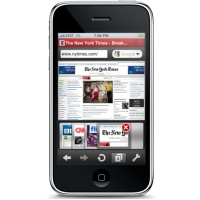 When I heard, yesterday, that Apple had approved the Opera Mini browser for iPhone, I was a bit more than surprised — I was shocked. Apple’s track record in
  The game of Oregon Trail is a major reason why I have been an avid user of Apple products for a quarter of a century.
Google vs. Apple: Who is More Open?
“Open” is the new buzzword du jour, with a few of the major tech companies claiming to support open standards. Two of those companies are Google and Apple. How open are they?
First of all, what is “open?” As Wikipedia notes, there is no single definition of an “open standard,” and interpretations vary with usage. Even the companies themselves seem to have differing definitions of open, depending on the setting. Let’s take a quick look at Apple and Google, and at how “open” they are.
Apple
Apple went one step further in closing the iPhone ecosystem recently, changing its iPhone Developer Program License Agreement so that developers must use Apple’s proprietary software if they want to get their apps approved for the iPad and iPhone.
So Apple is closed – end of story? It’s not that simple. As Steve Jobs pointed out in his somewhat disingenuous dissertation on Adobe’s Flash, Apple at least supports open web standards. And Apple’s website describes its support for the Open Source community, and its use of Open Source tools and programs. So in some areas, at least, Apple is open.
Google
Google has a reputation for being “open.” Android, for example, is open to the extent that anyone can develop for it, and release an app. And with Wave, Google has announced plans to release most of the source code as open source software, and has already made an open-source release of some Wave components.
At the same time, Google isn’t all about being open, either. While many of its products are open to some degree, its core product, search, is not. As any SEO guru will tell you, Google’s search algorithms are shrouded in mystery (albeit with parts that are known to be important, such as a page’s title). Why is Google so open in some respects, but not in others?
The Rub
Google seems to be more open, but the one area where it is most closed, search, reveals the the answer to openness for both Apple and Google. In short, both are large corporations, and both must make money for shareholders. As a result, both are open when it makes financial sense, and closed when it helps the bottom line.
For Apple, part of the financial success of the iPhone is due to its ease of use and reliability. That reliability would be difficult to achieve on an open platform. For Google, its search business is the core of its existence, which is why we’ll likely never see Google disclose exactly how it works. Google has said before that the more that people use the internet, the more money Google makes. If opening products, like Wave, leads to more people using the internet, then we can’t necessarily ascribe altruistic motives to Google’s open ways.
If you are a fan of either company, keep that in mind. Apple is more closed than Google, but at the end of the day, both Apple and Google are just trying to make a buck.